
What the ESL debate misses about the in-store experience
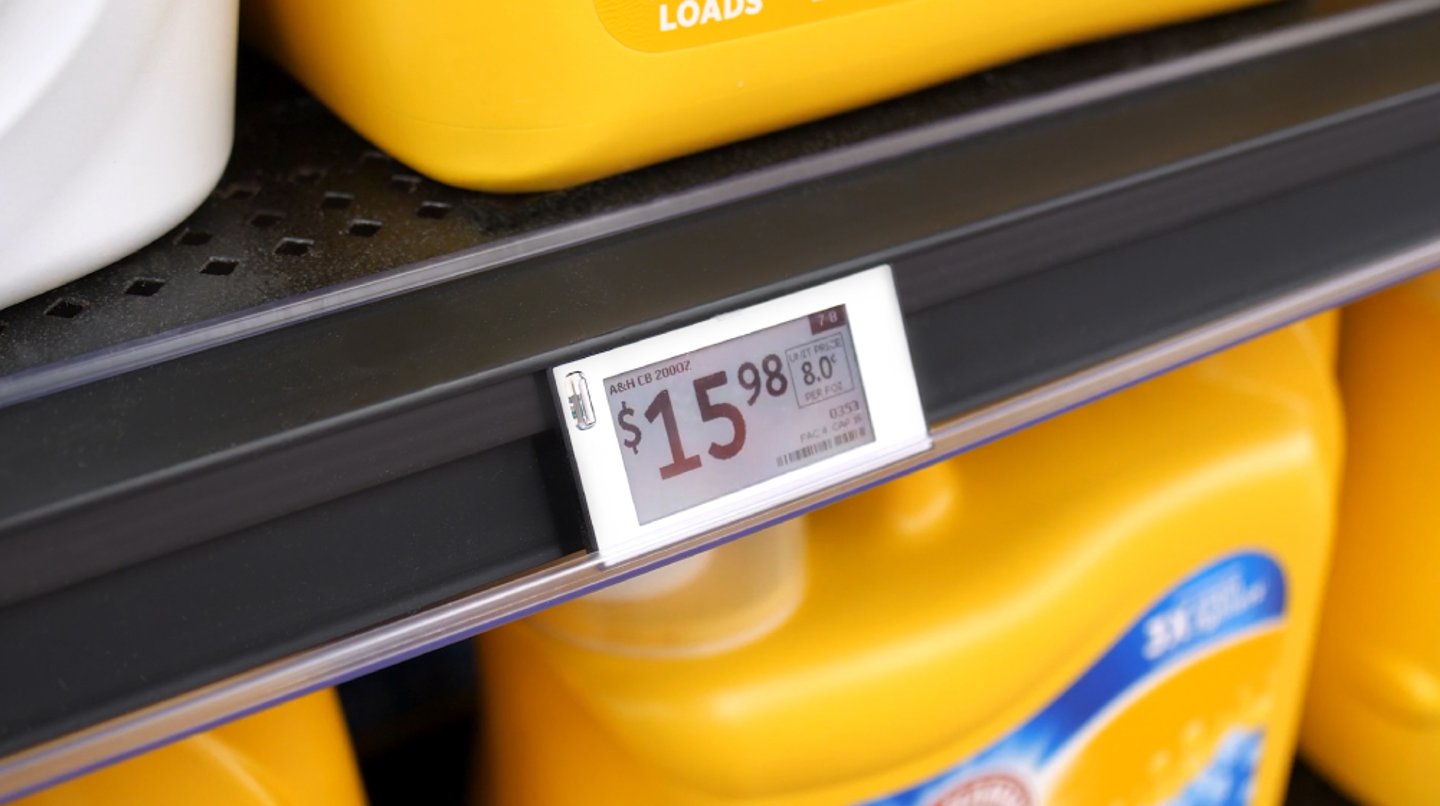
Pricing accuracy and consistency is one of the most important elements of the in-store customer experience.
The price at the shelf needs to match the one at checkout. If it doesn’t, customers lose trust and their loyalty is at stake. Electronic shelf labels (ESLs) have become the focus of ongoing debates and legislation surrounding this topic in grocery. Much of that conversation assumes grocers can change prices based on demand, and that ESLs enable, or even, empower them to do so.
That assumption is wrong. It’s not how grocery stores operate.
Pricing for grocery chains is typically set at the corporate level and executed on a set cadence, often weekly. Promotions are planned in advance and applied across thousands of items at once.
That process hasn’t changed with ESLs. What has changed is how those updates are executed.
In a paper-based system, store teams spend hours replacing tags across the floor. It’s actually one of the most time-intensive tasks for store associates. With ESLs, those same updates can be pushed digitally, often overnight, so prices are accurate when the store opens. That accuracy is critical to delivering a consistent customer experience, especially as shoppers move between online and in-store environments. With that freed up time, associates can focus on more important tasks, such as customer service.
Those are the benefits that have driven the strong uptick in ESL adoption over the past several years. At the same time, the conversation around the technology has shifted. ESLs have increasingly been framed as a tool for real-time pricing control, rather than the back-end infrastructure they are, even as the reality has remained unchanged.
That disconnect is reflected in the data.
Academic researchers from the University of Texas, the University of California, and Northwestern University updated their study on ESLs in March 2026, examining whether the technology led to more frequent pricing changes. After analyzing nearly 460 million grocery transactions across more than 100 stores, they found no evidence of surge pricing before or after ESL adoption.
Yet even in light of this research, legislative activity continues based on the misunderstandings of the underlying pricing model, which hasn’t changed.
In fact, ESLs emerged as a practical solution to a first round of grocer-focused legislation, centered exclusively on pricing accuracy, introduced decades ago.
States drew up and enforced laws that penalized grocers when shelf prices don’t match what rings up at checkout. Those rules were designed for a manual system where errors were common. ESLs have virtually eradicated this issue. Since they connect directly to centralized pricing systems, they ensure that what’s displayed on the shelf matches what’s charged at checkout.
That’s why there is a meaningful difference between policies that focus on pricing practices and those that target store infrastructure. One addresses how prices are determined. The other risks undermining how accurately those prices are delivered to customers.
Even with ESLs, grocers are not operating in a fully digital environment. They’re working within a hybrid model, where digital labels handle pricing, and paper signage is still used to support promotions that require more space and visibility.
That matters because it reinforces a simple point: pricing isn’t being adjusted continuously in response to demand. It’s being executed within a structured system that still relies on multiple layers and formats.
For grocers, the real question isn’t whether prices can change. They always have. The question is whether those changes are accurate, consistent, and clearly communicated to the customer.
Because grocers also understand the damage unexpected price swings would have on their sales. Margins are thin in grocery, and customer trust is critical.
As regulatory scrutiny increases, those fundamentals matter more than ever.
ESLs give retailers tighter control over pricing execution while reducing the operational burden on store teams. They help ensure that what a customer sees on the shelf is what they pay at checkout.
That’s where the value is, and where the conversation should be focused.
Tim McCracken, is chief revenue officer, SOLUM America.